Collaborate
Notice to Userss:This repository brings together projects created by people outside the INE using open data or tools that the INE makes available to the public for informational and dissemination purposes. The INE does not participate in its development and the contents are the sole responsibility of its authors. Its inclusion in this space does not imply, therefore, any development, validation, supervision or endorsement by the INE, nor does it imply any responsibility on the part of the INE in relation to the accuracy of its contents, the availability and security of the information, or with the operation of the project or updating of its contents. The INE has no legal relationship whatsoever with those responsible for these projects. The INE declines any responsibility related to software, tools or services provided by third parties that are accessed through links or references included on this website. Access to these external resources is the sole responsibility of the user, who must assess their terms of use, licenses, privacy policies and any other related aspects. The INE has verified the validity of the links at the time of their inclusion on this page, although it does not guarantee that the external links are operational, error-free, up-to-date or free of malicious elements (such as malware, viruses or fraudulent pages). Likewise, the INE shall not be held liable for any damage, loss or incident arising from the use or downloading of third-party tools, browsing external sites or interaction with services outside of the INE's own systems.
INEApy is a Python library designed to provide access to statistical data from the National Institute of Statistics (INE) of Spain through its API. Its main objective is to simplify interaction with the INE API, allowing users and developers to obtain statistical information quickly and in a structured, efficient manner. The library is arranged into two main components: on the one hand, a low-level wrapper that allows direct requests to the API with full control over the parameters; and on the other, a high-level layer that offers simpler and more intuitive methods for querying data now ready for analysis. In addition, the library incorporates parameter validation and error management mechanisms that guarantee the consistency of requests and robustness.
Added to Colabora: 09/04/2026
Nominao is a digital application focused on recommending and selecting proper names, combining official data from the INE with artificial intelligence techniques to offer a personalised search experience. The platform allows users to explore large volumes of names based on their frequency, distribution, and evolution, thus integrating statistical information into the decision-making process. From a functional standpoint, Nominao acts as a recommendation system that enriches the INE data through filtering algorithms and user preferences, facilitating the generation of suggestions adapted to different criteria (aesthetic, cultural or popularity). In addition, the application incorporates an interactive interface that encourages joint exploration and shared decision-making among users.
Added to Colabora: 02/04/2026
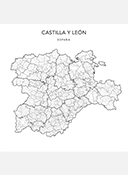
Castilla y León Census Section Search Engine
An interactive application developed with Shiny (R) technology whose objective is to facilitate the identification and analysis of census sections in the territorial scope of Castilla y León. The aim of the tool is to support statistical tasks, especially in the context of sample design and territorial management within the statistical system. From a methodological standpoint, SecCyL implements multivariate analysis techniques to measure the similarity between census sections, using indicators derived from the 2021 Population Census that have been previously transformed and standardised. In particular, it applies the robust Mahalanobis distance (MCD) to automatically identify those sections most similar to a selected one, allowing territorial units to be replaced while maintaining consistency and statistical representativeness.
Added to Colabora: 09/04/2026